
HOW HAIR WORKS | a love story
CALLING ALL HAIR NERDS! And really isn’t that every single one of us at one time or another?
Dear friends,
Hair is one thing we all have in common. Your hair can make or break your mood just by how it looks in the mirror in the morning. Sometimes it can affect the whole damn month. Think about all the eras of your life. Your hair was always there. Doing its thing.
And yet for many, one’s hair is a complete mystery. Why did it look so fabulous, wavy, and full a week ago Thursday at the car wash, and so wayward and out-of-sorts at the fancy Saturday night dinner party? Why do these things happen?
So when Jared said, “I’m thinking of writing an article called HOW HAIR WORKS,” the C+K staff cheered. We want to know more. And we work here! This kind of knowledge could actually increase day-to-day human happiness.
Without further ado, enjoy!
HOW HAIR WORKS.
Imagine a balloon that’s halfway inflated and covered solid in so many sticky notes that you almost can’t see the balloon beneath.
Now imagine blowing more air into the balloon until it’s fully inflated. As the balloon expands, the spaces between the sticky notes grow so you can more clearly see the balloon, and the sticky notes begin poking out in all directions.
The balloon is the shaft of your hair.
The sticky notes are the cuticles.
And the air expanding that balloon is tap water.
WATER DAMAGE. IT’S NOT JUST FOR DRYWALL.
That’s the paradox behind hydrating your hair – the more you get it wet, the less hydrated it is.
We know that statement is a lot to absorb. (See what we did there?). To make it make sense, read on.
TAKE A TRIP BACK TO MIDDLE SCHOOL SCIENCE CLASS.
(Also corresponds with the first time many of us realized that our hair might not be our best friend
and that we needed to figure out how to get along better.)
Do you remember the pH scale we all had to memorize? The pH scale ranges from 1-14. 1 being the most acidic and 14 being the most alkaline. With that perfect sweet spot at 7 where pure H2O lives.
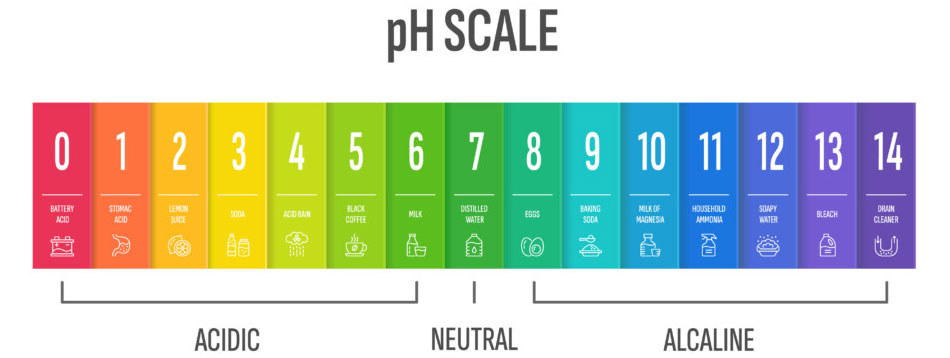
The truth is most of the water that comes out of our faucets is hard water. Over 80% of American households have tap water that’s around an 8 to 8.5 on the pH scale, the same range as seawater. Even if you don’t have hard water, your tap water is still likely to be around a pH 7.5.
This 7th Grade Biology recap may not seem like that big a deal, but it’s incredibly important for your hair and scalp.
Hair has an internal moisture of its own, and the pH of healthy, undamaged hair is lower than most water. Hair usually sits between 4.5 and 5.5 on the pH scale. Most tap water is significantly higher than that, especially hard water. The pH matters.
To understand why, let’s briefly explain how the hair is structured. Most people who aren’t professional hairstylists don’t usually dig into this science, which is one reason the hair care industry gets away with promoting ideas that are bad for your hair but great for their sales.
Human hair is made up of about 10% water and 90% protein. In its healthiest state, your hair is designed to be hydrophobic, which means it naturally repels water. Yep, that’s right. Your hair is meant to be waterproof.
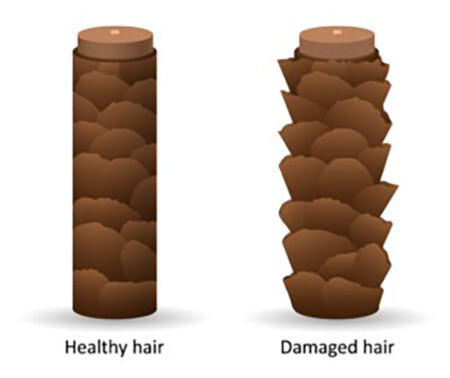
The definition of healthy, pristine hair is a closed cuticle that is protected against water, sun damage, and pollutants.
Damaged hair, on the other hand, has a raised cuticle and absorbs water easily.
THE BEST DEFENSE FOR YOUR HAIR IS A GOOD OFFENSE.
Your first line of defense against damage to your hair is your natural scalp sebum (AKA the healthy oils in your hair). Sebum is produced by glands in your scalp to keep your skin and hair protected. Sebum is water resistant, which is why daily brushing to spread scalp sebum down the hair shaft is beneficial.
This is also one reason curly and kinky hair tends to be drier: the sebum has a harder time traveling down the hair shaft. PLUS the cuticle of curly hair is naturally slightly more open. This makes curlies more susceptible to water damage.
The second line of defense is called the 18-MEA layer. This is a natural lipid coating that forms around the cuticle as your hair grows, making it waterproof.
But sun, hard water, hair coloring and bleaching, heat styling, pollution exposure, and stripping products wear down the 18-MEA layer and its natural waterproofing.
WELL, THAT’S JUST SWELL.
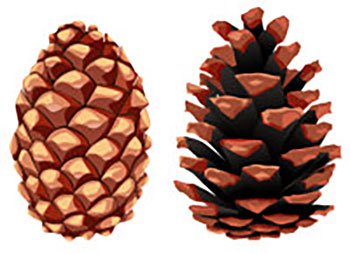
The first thing higher-pH water does is swell your hair. Let’s go back to that balloon covered in sticky notes. The balloon gets bigger and bigger, like the inner hair shaft does, and those sticky notes poke out in all directions, no longer protecting the balloon underneath.
Household bathing water has a much higher pH than your hair, so it causes the same type of swelling. How many times a week do you wash your hair? That repeated swelling raises and opens the cuticle, over and over again, every time you shower.
When the cuticle is open, the low-pH water inside your hair evaporates. That leaves your hair like a dry sponge. So the next time you add water, it soaks up even more of the high-pH tap water. This causes more swelling, damage, and more evaporation.
It’s a vicious cycle.
And “vicious” is not an overly-dramatic or sensationalized word to describe it.
Remember the natural state of healthy hair is a closed, flat cuticle. When your cuticle is open, bad things start to happen: Frizz, tangles, color loss, protein loss, breakage, split ends, and less vibrant, shorter-lasting colors.
This is called Hygral Fatigue, or literally fatigued by water.
So all that time you spend dousing your hair in water is actually making it more dehydrated.
AND THERE’S MORE!
ME, MYSELF, AND MY MICROBIOME.
It’s not just your hair that is affected, let’s talk about scalp health.
Your scalp has an acid mantle (a thin protective layer of fats and amino acids), which means it functions best in a lower, more acidic pH range. Like your hair, your scalp likes to have an optimum range of 4.5 to 5.5. A healthy scalp microbiome thrives in this environment. When the pH is raised too high, it disrupts this protective layer and can encourage the growth of unwanted microorganisms.
Our microbiomes are fascinating and incredibly important to overall human health. We’re just beginning to uncover all the amazing ways it supports us, and one thing is becoming clear: it’s best not to disturb it, let it do its thing.
Think of the microbiome as a garden. The more diverse and full your garden is, the healthier it becomes. But if your good, healthy plants start to die off, that space gets filled by weeds (or, harmful microorganisms).
In the case of your scalp, one of the most common is a type of yeast called Malassezia.
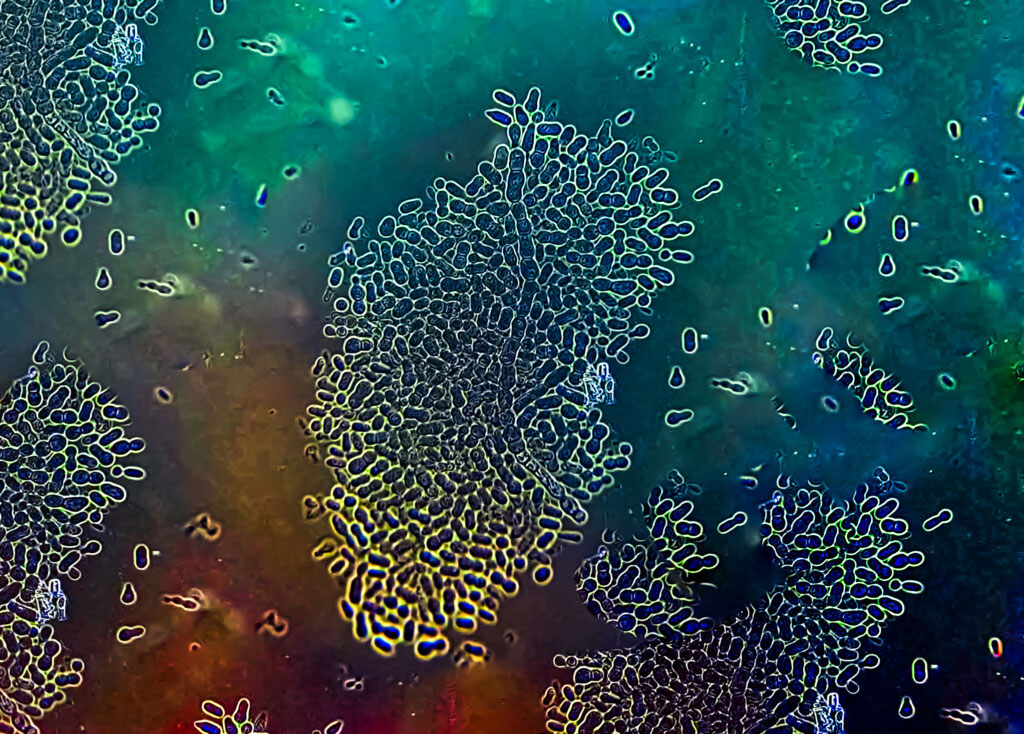
(this looks scarier than it is!)
Everyone has Malassezia living on their skin and scalp as part of a natural microbiome, but the more it overgrows, the more likely you are to experience dandruff or Seborrheic Dermatitis. Malassezia thrives in a pH range of around 7 to 8 – which is right where you’ll find your tap water. Every time you wet your hair and scalp, even temporarily, you raise the pH. And since most of us are washing regularly, this shift happens over and over again, making a nice little home for Malassezia to crowd out the other healthy microorganisms on your scalp.
We don’t know about you, but at this point in Jared’s HOW HAIR WORKS story, half the staff was hyperventilating. Who knew?
So what’s the solution?
Are we talking about expensive home water treatments?
Should you stop washing your hair with water altogether?
Not at all. This doesn’t have to be so complicated.
IT’S A BIRD, IT’S A PLANE, IT’S… SUPERWATER AND TONIK.
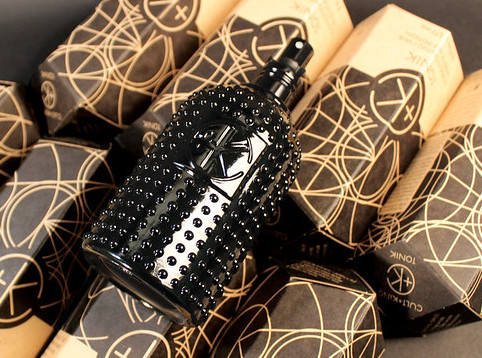
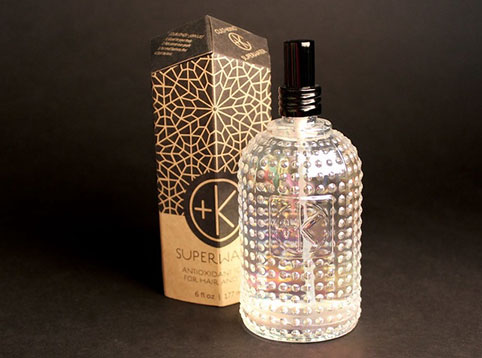
TONIK and SUPERWATER were created specifically to address this pH issue. Their primary function is to lower the pH of the hair and scalp after bathing, bringing everything back to a healthier, more balanced state. This is why we call them the FOUNDATION products in our line. They both sit around 4.7 on the pH scale, which is right in the sweet spot for healthy hair and scalp.
TONIK and SUPERWATER should be applied liberally all over the scalp and hair after washing, and before any styling products. They create the ideal base for everything else that follows. These botanical solutions get absorbed into the hair, lowering the pH and becoming part of that critical 10 percent internal moisture. As the pH of the hair goes down so does the cuticle, sealing the hair. TONIK and SUPERWATER restore the pH from the inside out. They are also fantastic to re-wet next-day hair without that pesky high-pH tap water.
But that’s just the beginning of what these powerful elixirs can do. Want to know more? Check out the TONIK and SUPERWATER How-To Guides for the full breakdown.
Want to learn more about the pH levels of ALL CULT+KING products? You got it. Check out our new Knowledge Base and our in-depth breakdown of each product’s pH level.
And they all lived happily ever after.